


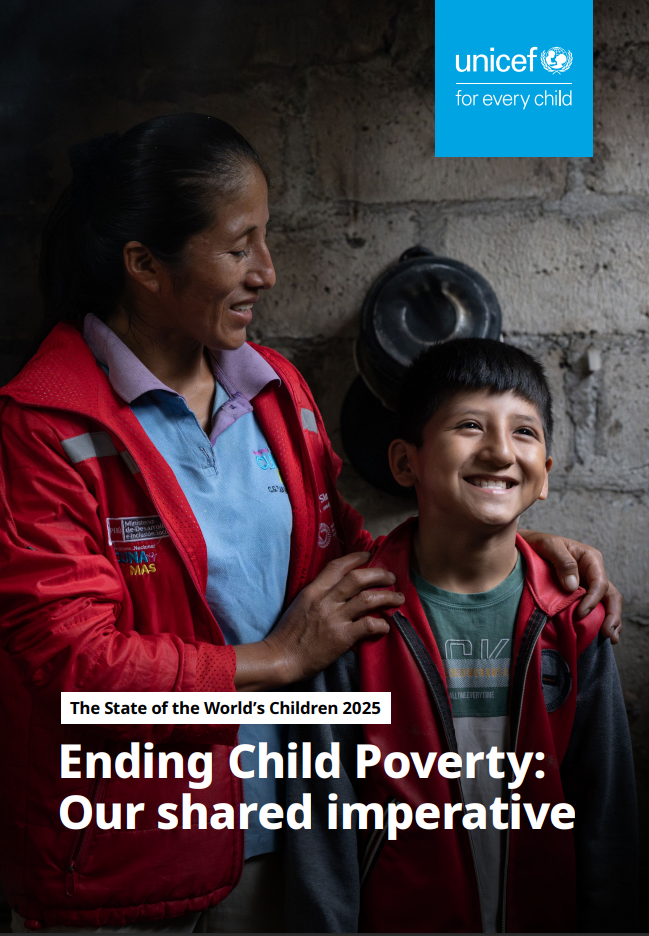
The State of the World’s Children 2025 report highlights that child poverty is a profound violation of child rights, affecting children’s entitlements to education, health, nutrition, housing, sanitation, water, protection, and participation.
Despite earlier progress, 412 million children still live in extreme monetary poverty, and 417 million are severely deprived in at least two essential dimensions of well-being, signalling growing challenges to realizing the Convention on the Rights of the Child.
The report highlights how conflict, climate shocks, and a global funding crisis are reversing gains.
- One billion children face extremely high climate risk;
- 19% lived in conflict zones in 2024; and
- aid cuts combined with rising debt are reducing governments’ ability to protect children.
These threats deepen inequality—particularly in sub‑Saharan Africa and South Asia—and disproportionately affect the youngest children, children with disabilities, displaced children, and girls.
UNICEF identifies five policy pillars with strong evidence for reducing child poverty:
- making child poverty a national priority;
- supportive macroeconomic policies;
- inclusive social protection;
- quality public services; and
- decent work for caregivers.
Cash‑plus interventions, universal child benefits, shock‑responsive systems, and integrated services show consistent success.
What the State of the World’s Children Report means for FORUT and its partners
The report places strong emphasis on the role of civil society organizations—highly relevant to FORUT’s work in child rights, community mobilisation, and empowerment. Non-government organisations – from national coalitions, to community and grassroots organisations are essential for:
- Reaching marginalized children in fragile, conflict‑affected, or climate‑affected areas
- Delivering community‑based social protection, psychosocial support, and offline/alternative education
- Supporting displaced and migrant children with legal, educational, and protection services
- Integrating child-focused policies into national climate and development planning
- Amplifying youth participation and local accountability mechanisms
These findings reinforce FORUT’s commitment to rights‑based, community‑driven, preventive, and advocacy-oriented programming aimed at breaking structural causes of child poverty.