


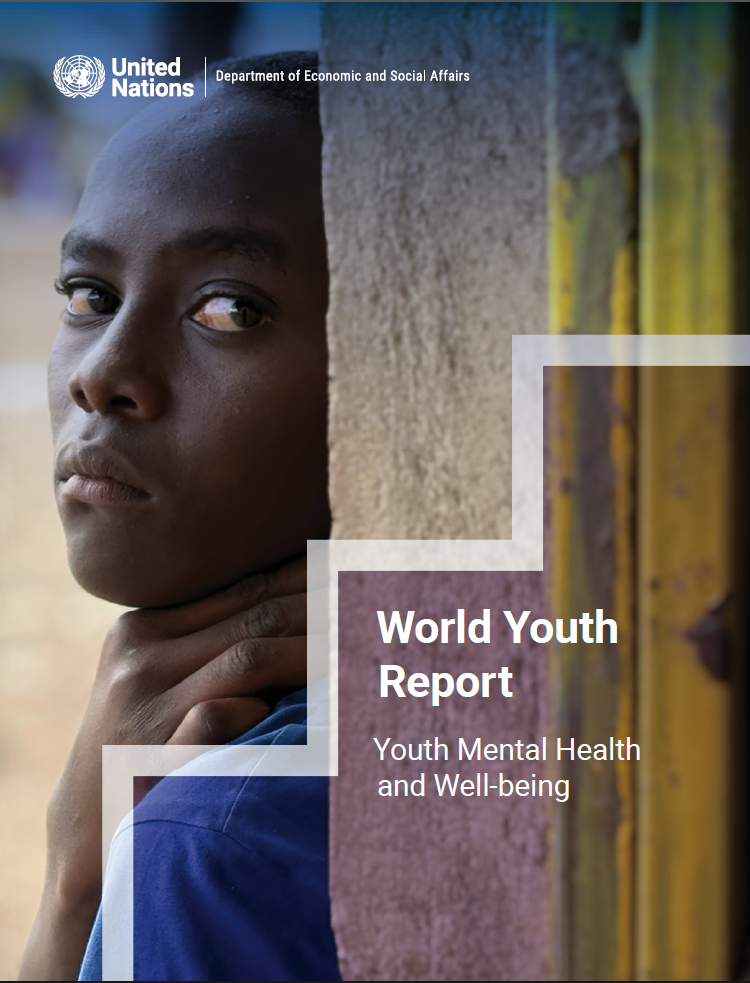
The World Youth Report 2025 highlights how youth mental health is shaped by six interconnected social determinants: education, employment, family and relationships, poverty and deprivation, technology and the online environment, and society/community. Drawing on 2,578 survey responses from 137 countries, 148 focus‑group participants, and nine in‑depth interviews among youth aged 15 to 29 years old, the report underscores that many young people face significant mental health challenges: 43% rated their mental health as poor or fair, while stigma, lack of trust, cost, and not knowing where to seek help remain major barriers to support.
Key vulnerabilities include discrimination (e.g., against Indigenous, LGBT, migrant, and disabled youth), unemployment and job insecurity, online harms, family conflict, and poverty. On the other hand, protective factors include supportive families, positive school climates, a sense of belonging in the community, culturally grounded support, and youth-led initiatives.
The report stresses that mental health policies must be inclusive, multisectoral, prevention‑focused, and youth‑centered, addressing structural inequalities and ensuring no one is left behind.
The report also offered recommendations for the following areas:
- Education: Foster supportive environments within schools, promoting social-emotional learning, adequately funding mental health programmes, and implementing effective school-based, mental wellness initiatives to enhance overall well-being.
- Employment and Youth Mental Health: Policies to support fair remuneration, workplace inclusivity, and youth employment transitions to mitigate negative mental health outcomes.
- Family Context: In parental support programmes, foster open communicaiton, and interventions addressing family-related stressors, and trauma to enhance youth mental health outcomes.
- Poverty and Deprivation: Interventions to address economic inequality, promote protective factors against suicide, and implement targeted interventions for marginalized youth populations.
- Technology and online environment: Digital literacy among youth and promotion of partnerships between schools and technology companies to ensure equitable access to quality education.
- Society: On stigma, focus on community awareness, normalization efforts, and improving the visibility of individuals with mental health challenges.
Recommended citation:
United Nations. (2025). World Youth Report on Youth Mental Health and Well-being. New York: United Nations.